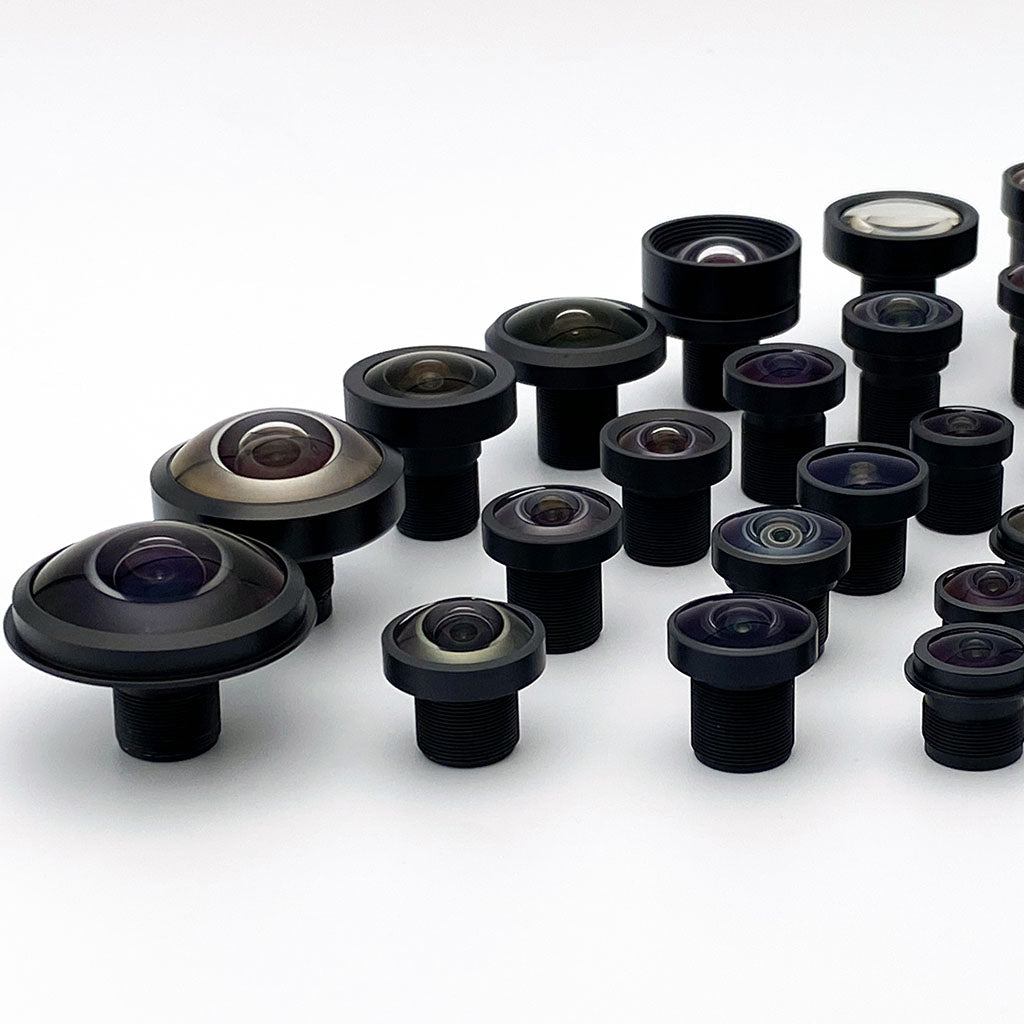


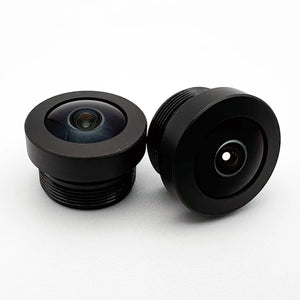
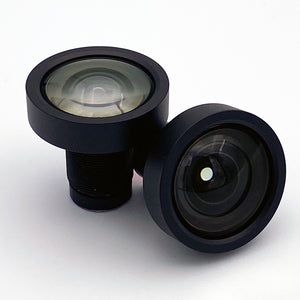
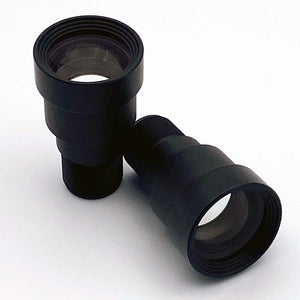
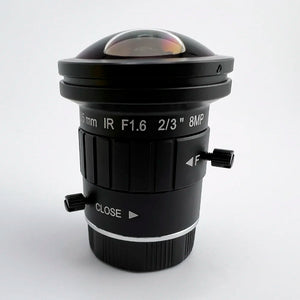
防犯カメラのレンズの選定方法
4つの決定事項を正しく選べば、固定焦点か可変焦点か、およびマウント形式の選択は自然と決まります。具体的には、昼夜切り替え用のIRカットフィルター、NIR波長、低照度時の開口径、そして設置時にマウント距離を固定するかどうかです。
昼夜対応の撮像および赤外線補正
カメラに機械式のIRカットフィルター切り替え機構が搭載されている場合は、常にIR補正レンズを使用してください。 日中は、この切り替え機構がIRカットフィルターを挿入するため、センサーは可視光のみを捉え、色が正しく再現されます。夜間は、フィルターが外されるため、センサーは近赤外線(NIR)照明を利用して、低照度下でのモノクロ画像を撮影できます。この切り替えの際も、レンズはフォーカス位置を正確に維持しなければなりません。そうしないと、切り替えが行われるたびに画像がぼやけてしまいます。
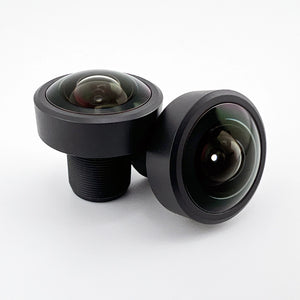
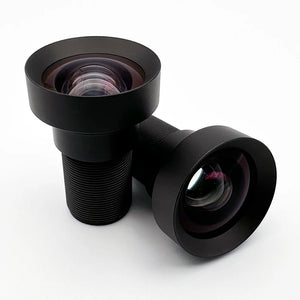
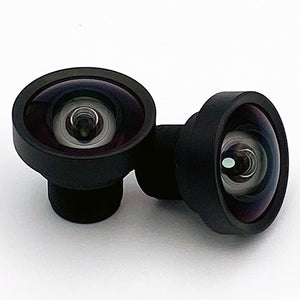
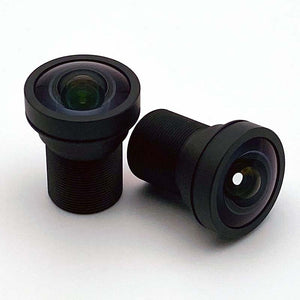
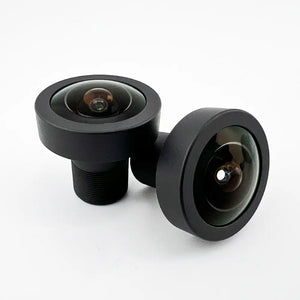
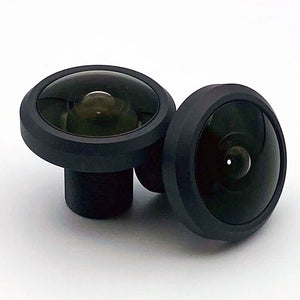
Commonlands stocks IR-corrected M12 lenses for exactly this: the CIL046 4.4mm M12 lens is RGBIR-corrected at F/2.0 for 1/1.7" sensors up to 8MP, and the CIL290 1.9mm M12 fisheye is IR corrected with an optional 660nm IR-cut filter variant for 1/2.7" sensors up to 5MP. Both ship in versions with and without the cut filter installed.
通常のガラスは、可視光波長域と近赤外(NIR)波長域で屈折率が異なるため、可視光のみに最適化されたレンズでは、近赤外光が被写体の主な光源となった場合、最も鮮明な像が形成される焦点面がわずかにずれてしまいます。赤外線補正レンズの設計では、ガラスの屈折率を補正することで、両波長帯にわたって焦点面が一致するようにしています。詳細な仕組みについては、「赤外線補正レンズガイド」および「バンドパスフィルターガイド」内の「昼夜用フィルター切替装置」の項目をご覧ください。
設置環境にスイッチャーがない場合(昼間専用の固定カラーカメラ、または夜間専用の固定NIRカメラなど)、設計が単一の波長帯に最適化されており、波長帯を跨ぐ必要がないため、標準的な非IR補正レンズで十分です。デイ/ナイト仕様のベンチテストでは、単一の照明条件下での静的な焦点チェックだけに頼るのではなく、昼間(IRカット)と夜間(NIR)の両方の状態を検証する必要があります。
850nmと940nmの近赤外(NIR)照明の比較
850nm and 940nm are the two common NIR wavelengths for surveillance, and the choice trades range against covertness. 850nm illuminators produce a faint visible red glow, but most CMOS sensors retain meaningfully more quantum efficiency at 850nm, which means more usable signal and often longer range at the same illuminator power. 940nm is close enough to invisible that most people never notice it, but sensors typically respond less strongly, so image quality or range drops unless the sensor and lens are selected for 940nm.
ここでのレンズの役割は、単に照明の選定にとどまりません。赤外線補正済みのレンズは、照明装置が使用する近赤外(NIR)帯域全体にわたって焦点を維持できる必要があり、レンズのコーティングやガラスの透過率については、単に想定するのではなく、その特定の波長に対して確認する必要があります。850nmでの性能が検証済みのレンズであっても、940nmでも自動的に同等の補正がされているとは限りません。センサー側の量子効率の比較については、「850nm対940nm」ガイドを参照してください。
検知範囲と画質を最優先し、イルミネーターの微かな光が許容できる場合は、850nmを選択してください。設置環境上、イルミネーターを事実上目立たなくする必要がある場合は、940nmを選択してください。ただし、センサーモデルによって940nmにおける量子効率が大きく異なるため、決定する前にセンサーのデータシートで940nmにおける量子効率を確認してください。
低照度時の絞り選択
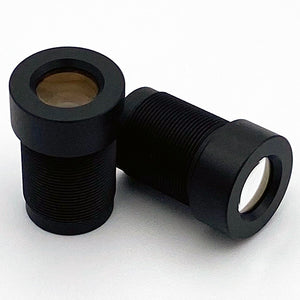
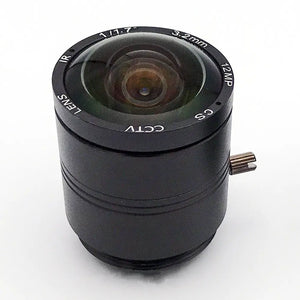
A faster lens, meaning a lower F-number, collects more light per unit time at a given exposure and gain setting, which is the main lever for nighttime image quality once illumination power is fixed. The CIL542 12mm C-mount lens ships with an adjustable iris from F/2.8 to F/16, so the same lens runs wide open at night and stops down in daylight for glare control and depth of field. M12 low-light options are fixed at a single aperture set at manufacture; the CIL046 ships at a fixed F/2.0.
Stopping down has its own cost that grows with F-number: diffraction. At 550nm, the Airy disk diameter is roughly 10.7µm at F/8 and 14.8µm at F/11; under 850nm NIR illumination both grow by roughly 1.5 times. That is already 4 to 6 times the 2.5µm pixel pitch of the 25MP 1.1" sensors the CIL542 pairs with, well past the point where the aperture itself limits resolution.
In practice, small-pixel C-mount surveillance lenses hit the diffraction ceiling around F/5.6 to F/8. Stop down for daylight glare and depth of field only as far as that ceiling allows, not to the smallest available aperture. See the low-light lens selection guide.
固定焦点と可変焦点
固定焦点レンズは、よりシンプルでコンパクト、かつ多くの場合安価な選択肢であり、設置前に取り付け距離や必要な撮影範囲が分かっている場合には、実用的な選択肢となります。固定された出入り口の上の一定の高さに設置されたカメラの場合、稼働開始後に視野角を変更する必要はほとんどないため、固定レンズを採用することで、機械的な調整作業や潜在的な故障箇所を排除することができます。
バリフォーカルレンズを使用すれば、設置業者は光学系を交換することなく、現場で焦点距離、ひいては視野角を調整することができます。この柔軟性は、設置業者が屋根や電柱に登ってからでないと正確な設置距離が決まらない場合や、試運転後に撮影範囲の要件自体が変更される可能性がある場合に、そのコストに見合う価値を発揮します。Commonlandsの現在のM12およびCマウント製品ラインナップは、固定焦点レンズです。詳細な比較については、「固定焦点レンズとバリフォーカルレンズの比較ガイド」をご覧ください。
範囲とカバレッジ
広角レンズと望遠レンズはそれぞれ異なる課題を解決するものであり、同じセンサー解像度において、その両方を十分にこなせる単一のレンズは存在しません。焦点距離が短いレンズは、より広い範囲を捉えることができますが、その広い範囲にセンサーの画素が分散されるため、個々の被写体に割り当てられる画素数が減少します。一方、焦点距離が長いレンズは、画素を狭い範囲に集中させるため、全体的な画角を犠牲にする代わりに、遠方の被写体の解像度を向上させることができます。
マシンビジョン全般で用いられるのと同じ直線的な関係式が、そのまま適用されます:EFL = (作動距離 × センサー幅) / 被写体幅。この線形関係は、一般的な監視カメラの設置環境のように、作動距離が焦点距離よりもはるかに長い場合に成立します。この式には、CIL290などの魚眼レンズは含まれません。190°の魚眼レンズの撮影範囲は、そのレンズ固有の歪みマッピングに従うためです。 特定の設置環境における幾何学的条件については、視野角計算ツールを使用して確認してください。
撮影範囲計画において、最も遠い距離で撮影対象に実際に必要な詳細度を決定し、その距離でその画素密度を達成できるよう焦点距離とセンサー解像度を決定すべきであり、先に焦点距離を決めてから詳細度が追随することを期待するようなやり方は避けるべきです。 広範囲をカバーするカメラ1台と、特定の要所を捉える長焦点距離のカメラ1台以上を組み合わせたマルチカメラ構成は、この考え方の直接的な結果です。広角カメラが状況把握を担当し、狭角カメラが実際に識別レベルの詳細を必要とする領域を担当します。
Traffic and ITS applications
Intersection monitoring, license plate capture, and roadway ITS cameras push both ends of the surveillance envelope at once: long working distance and day/night operation. Plates sit tens of meters from the pole, so the focal length has to concentrate pixels on a target the width of a car, and night capture runs under NIR illumination, so the lens has to hold focus across the visible-to-NIR transition.
The CIL595 35mm IR-corrected C-mount lens is built for that combination: telephoto reach on 1.1" high-resolution sensors, F/1.8 for the night exposure budget, and IR correction so plate focus survives the switch to NIR illumination. Size the required focal length against your mounting distance with the field of view calculator, and see the ITS lens guide for the full application.
センサーのフォーマットと解像度の整合
For rectilinear lenses, the image circle has to cover the sensor diagonal with margin, or the image vignettes at the corners regardless of how well the rest of the specification matches. Fisheye lenses are the exception: a fisheye's circular image is deliberately cropped by the sensor rather than sized to clear the diagonal.
Common surveillance formats run from 1/2.9" to 1/1.7" in compact M12 IP camera modules, and up to 2/3" or 1.1" in higher-resolution C-mount builds. The CIL046 covers up to 1/1.7" at 8MP, the CIL290 fisheye's 5.8mm image circle pairs with 1/2.7" sensors, and the CIL542 covers 1.1" sensors at 25MP with 2.5µm pixel pitch.
レンズの解像力は、少なくともセンサーのピクセルピッチと同等以上でなければなりません。そうでないと、光学的なボケが制限要因となり、追加されたメガピクセル分について実用的なディテールがほとんど得られなくなります。2つの隣接するレンズのイメージサークル規格のどちらを選ぶか迷った場合は、カバー範囲の点では大きい方が安全な選択肢ですが、特定のセンサーに対する解像力やCRAとの互換性については、推測するのではなく、必ず確認する必要があります。「空間解像度ガイド」および「センサーサイズとレンズの互換性ガイド」を参照してください。
屋外用カメラの防塵・防水対策
A lens needs its own ingress protection rating only when it is directly exposed to weather rather than sitting behind a sealed camera housing dome or window. Board-level and open-frame designs, where the lens front element faces the environment directly, are where a lens-level rating matters on its own. Commonlands stocks select M12 lenses rated for direct outdoor exposure: the CIL290 is IP67 rated in addition to being IR corrected.
レンズのIP67規格は、レンズアセンブリ自体を粉塵や一時的な水没から保護するものです。カメラ本体、コネクタ、ケーブルについては、別途規格認定を受けていない限り、この保護範囲には含まれません。完全に露出された屋外設置を行う前に、レンズレベルだけでなくシステムレベルでの規格を確認してください。IP規格ガイドおよび耐環境性レンズガイドをご参照ください。