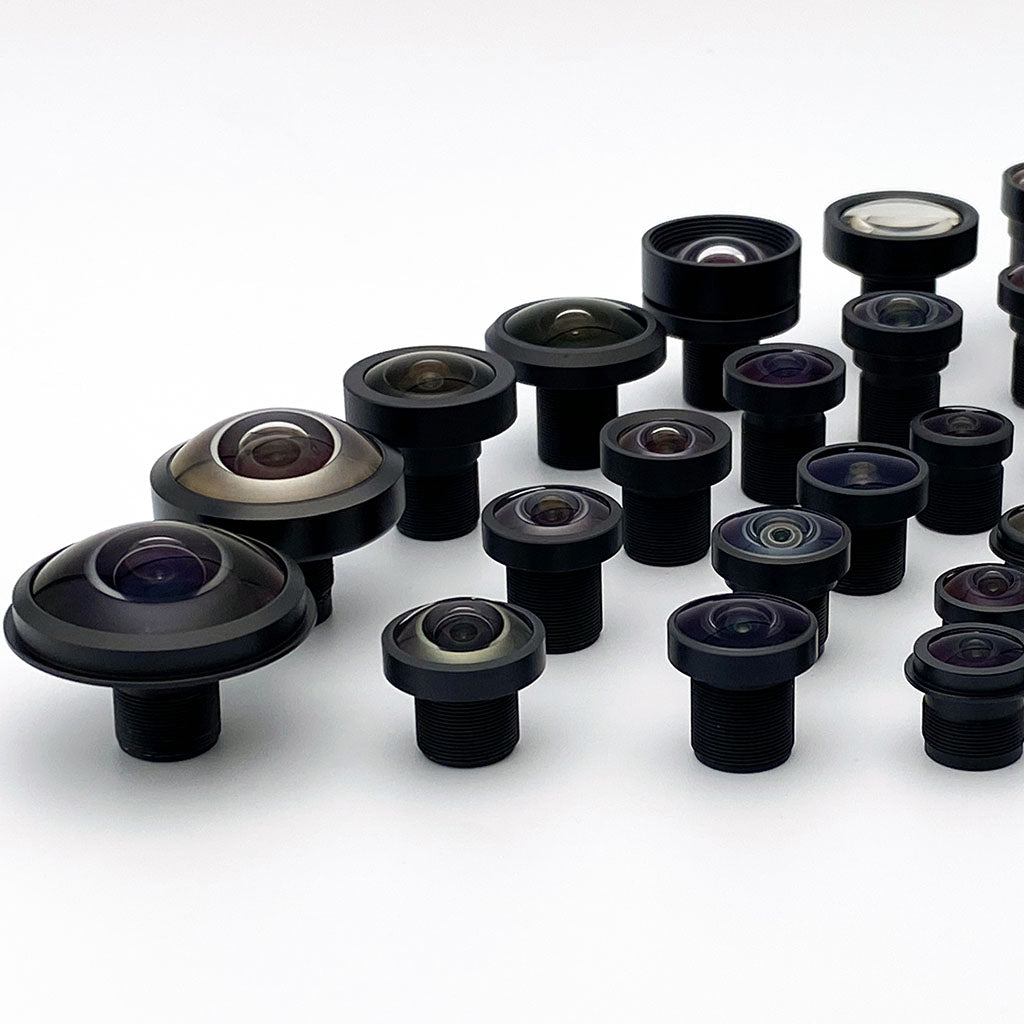

Custom Camera Lens Optical Design & US Manufacturing

Custom camera lens optical design is the process of engineering application-specific optics optimized for your sensor format, field of view, and environmental requirements. Commonlands provides integrated lens design and US-based manufacturing—from initial specification through volume production—at our ISO 9001:2015 certified San Diego facility.

10,000+
Units/Month Capacity
3,500 ft²
Cleanroom Space
ISO 9001
Certified
Custom M12 and S-mount lenses designed and manufactured in the USA
Designed and Manufactured in the USA
📍 Ships from San Diego, CA
ISO 9001:2015 Certified
🇺🇸 US Citizen Owned
🔧 DFM-Integrated Design

Integrated Design & Manufacturing

Commonlands custom lens design services are exclusively for lenses manufactured at our San Diego facility. We do not provide standalone optical designs for external manufacturing. This integrated approach ensures design-for-manufacturability (DFM) alignment with our assembly equipment, process capabilities, and quality systems from the earliest design stages.

Non-China Component Sourcing Available

We maintain supplier relationships in Japan, Taiwan, South Korea, and the United States for optical elements. Custom lens designs can be manufactured using non-China sourced components for customers with supply chain diversification requirements, tariff considerations, or regional sourcing mandates.

Optical Design & Engineering Services

Full-service optical engineering from concept through production, optimized for our manufacturing capabilities

Optical Design & Analysis

Lens design using industry-standard ray tracing software:

  • • Design and optimization in Zemax OpticStudio and CodeV
  • • Tolerance analysis and Monte Carlo sensitivity studies
  • • Stray light analysis and ghost image reduction
  • • Wide-angle and fisheye lens design
  • • Athermalization for outdoor temperature ranges

MTF & Image Quality Testing

Optical performance validation using precision equipment:

  • Trioptics ImageMaster HR2 MTF measurement
  • • On-axis and off-axis spatial frequency response
  • • Distortion mapping and back focal length verification
  • Imatest image quality analysis
  • • Production test station configuration and correlation

NPI & Reliability Validation

Development and qualification support:

Manual vs. Automated Lens Assembly

Manual lens assembly in US cleanroom with precision fixturing
Manual Assembly

Precision Manual Lens Assembly

Hand assembled alignment in our Class 1000 cleanroom.

  • Suitable for prototypes and engineering validation builds
  • Flexibility for design iterations between builds
  • Custom alignment procedures for each lens design
  • Lower tooling investment for initial production
  • 100%MTF testing on each unit
1–500
Units per Build
Lower
Tooling NRE
Automated M12 lens assembly equipment for high-volume manufacturing
Automated Assembly

Fully Automated Lens Assembly

Robotic assembly systems provide high-throughput production.

  • Consistent quality across production runs
  • Lower per-unit cost at volume
  • Statistical process control (SPC) and traceability
  • Scalable throughput to 10,000+ units per month
  • Integrated reliability qualification support
1,000+
Units per Month
Lower
Per-Unit Cost

Custom Optical Design for Machine Vision

Whether you need modifications to existing catalog lenses or ground-up optical engineering for a unique application, our engineering team delivers custom solutions optimized for your system requirements. We specialize in M12 (S-mount), C-mount, and custom thread configurations for embedded vision, robotics, and industrial automation.

Custom M12 and S-mount lenses in various focal lengths

Custom M12 & S-Mount Lenses

Wide-angle to telephoto for robotics, ADAS, and industrial inspection

Customization Services

Our engineering team provides lens customization services designed for production at our San Diego facility. All custom lenses undergo Trioptics HR2 MTF testing and can be validated through our environmental reliability testing services, including thermal cycling, humidity exposure, and vibration testing.

Additional services include anti-reflection coatings optimized for your spectral band, MTF testing at specific field angles, and back focal length adjustments for sensor stack-up compatibility.

Custom Lens Design Process

From specification through volume production with DFM integrated at every stage

1

仕様

Define requirements: FOV, resolution, sensor format, working distance, f-number, and environmental conditions

2

Optical Design

Ray tracing optimization in Zemax, tolerance analysis, and DFM review against our production capabilities

3

Prototyping

First articles with MTF verification, environmental testing, and design iteration

4

Production

Volume manufacturing with 100% optical testing, SPC, and unit-level traceability documentation

Benefits of US Lens Manufacturing

Domestic production provides strategic advantages for supply chain and program management

🔒

IP Protection

Optical designs protected under US intellectual property law with NDA coverage and secure documentation handling.

💬

Direct Engineering Access

Work directly with our optical engineers in US time zones without translation delays or overnight communication cycles.

🏭

Supply Chain Resilience

Reduce exposure to international shipping disruptions, tariff changes, and geopolitical supply chain risks.

🌏

Non-China Sourcing

Access to optical element suppliers in Japan, Taiwan, South Korea, and the US for customers with regional sourcing requirements.

📋

Quality Traceability

ISO 9001:2015 certified quality system with unit-level traceability reports for customers in regulated industries.

🔧

DFM Integration

Designs validated against our production capabilities from the start, reducing yield issues and time-to-production.

Manufacturing Capabilities

Our San Diego facility spans 6,000 sq ft across two buildings, including 3,500 sq ft of cleanroom space equipped for optical testing and precision assembly.

Capability 仕様
Cleanroom Class 1000 (ISO 6) hardwall cleanroom with laminar flow workstations
MTFテスト Trioptics ImageMaster HR2 for on-axis and off-axis MTF measurement
Reliability Testing Thermal cycling, humidity exposure, vibration, thermal shock
Production Volume Single prototypes through 10,000+ units per month
Lens Mount Types M12×0.5 (S-mount), M8×0.5, M7×0.35, C-mount (1"-32 TPI), custom threads
Sensor Compatibility 1/6" to 1" optical format; Sony IMX, OmniVision, onsemi image sensors
Assembly Methods Manual precision assembly and fully automated robotic lines
Bonding UV-cure adhesive, thermal-cure epoxy, mechanical retention
フィルター統合 IR-cut, bandpass, dual-bandpass filter bonding into lens barrel
Component Sourcing Japan, Taiwan, South Korea, USA (non-China options available)
Quality System ISO 9001:2015 certified with unit-level traceability available

よくある質問

Common questions about custom lens design and US manufacturing

Timelines vary by complexity. Simple modifications to existing designs (filter integration, aperture changes, barrel modifications) typically require 2–4 weeks. Ground-up optical designs with new prescriptions require 8–12 weeks from specification to prototype delivery. Volume production ramp-up adds 4–8 weeks depending on quantity and tooling requirements. Budget 12–16 weeks for a complete custom lens development cycle from initial specification to production-ready status.
Manual lens assembly uses skilled technicians with precision fixturing and microscope-aided alignment. This approach is appropriate for prototypes, engineering validation builds, and production volumes under 500 units where design flexibility between builds is valuable and tooling investment should be minimized. Automated lens assembly uses robotic systems that provide consistent, high-throughput production with reduced unit-to-unit variation. Automation becomes cost-effective at volumes above 1,000 units per month. We can help determine the optimal approach based on your volume forecast and cost targets.
Yes. We maintain supplier relationships in Japan, Taiwan, South Korea, and the United States for optical glass elements, plastic molded elements, and mechanical components. Custom lenses can be manufactured using non-China sourced components for customers with supply chain diversification requirements, tariff mitigation needs, or regional sourcing mandates. Discuss your sourcing requirements during the specification phase so we can factor component availability into the design.
No. Our custom lens design services are integrated with our US manufacturing capabilities. We design lenses specifically optimized for production in our San Diego facility, ensuring design-for-manufacturability alignment with our assembly equipment, process capabilities, and quality systems. This integrated approach means designs are validated against our actual production constraints from the earliest stages, reducing yield issues and accelerating time-to-production. We do not provide standalone optical designs for external manufacturing.
We perform 100% MTF testing on production lenses. Our Trioptics ImageMaster HR2 provides MTF measurement at multiple field positions and spatial frequencies. Testing includes distortion characterization, back focal length verification, and relative illumination measurement. For system-level validation, we use Imatest for resolution, noise, and color accuracy analysis. Our reliability testing services include thermal cycling (−40°C to +85°C), humidity exposure (85°C/85% RH), thermal shock, and vibration testing per customer specifications or industry standards.
Commonlands is ISO 9001:2015 certified for quality management systems (achieved 2024). Our facility includes Class 1000 (ISO 6) cleanroom environments with continuous particle monitoring, ESD protection protocols, and laminar flow workstations. We perform 100% functional testing on production lenses using both high-volume test stations and precision Trioptics HR2 equipment. Unit-level traceability documentation is available for customers in regulated industries requiring lot tracking and inspection records.

Start Your Custom Lens Project

Contact our engineering team to discuss your optical design requirements. Include your target sensor, field of view, working distance, environmental conditions, and estimated production volume.

Contact Engineering Team