

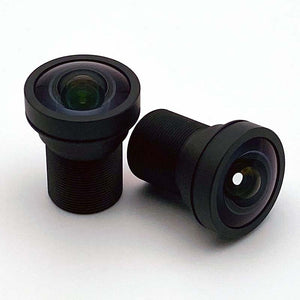
ドローン用のM12レンズの選び方
ドローンの光学系は、地上設置型システムとは異なります。機体に1グラムでも重量を追加すれば、その分だけ飛行時間が削られてしまいます。レンズがしっかりと固定されていないと、プロペラの回転による振動で画像がぼやけてしまうこともあります。また、必要な視野角(FOV)は、ゲートを駆け抜けるレースを行うのか、建設現場を調査するのかによって、まったく異なります。ここでは、こうしたトレードオフをどのように検討すべきかについて解説します。
重量制限
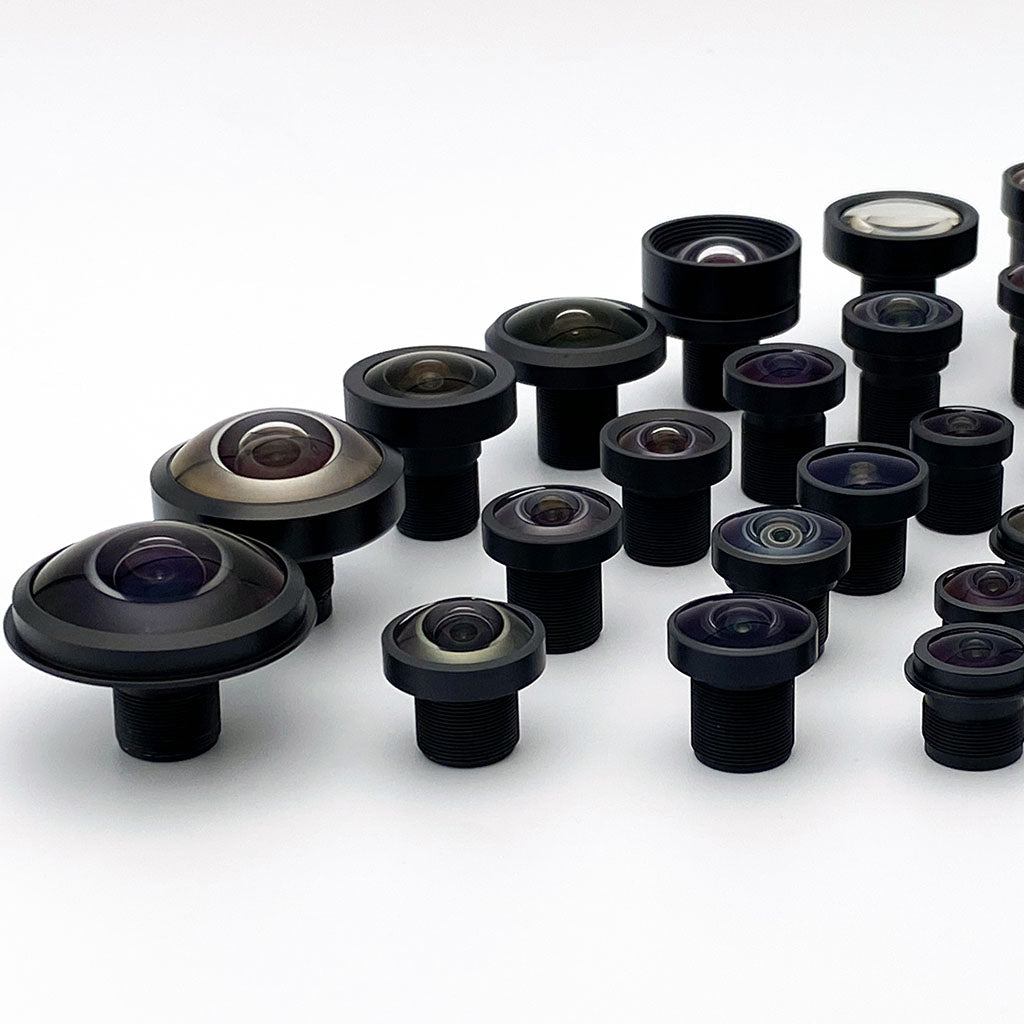
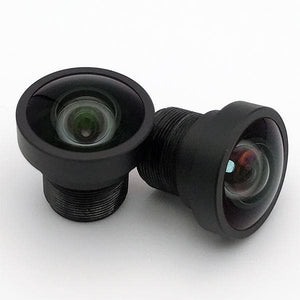
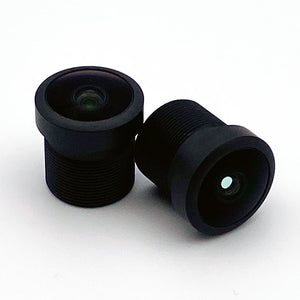
On a small quad, payload weight directly affects flight time and maneuverability. A 5g lens versus a 2g lens means a measurable difference in battery drain. M8 lenses are generally lighter than M12, with some under 1g total. The CIL829 (M8, 2.8mm) weighs 1.4g in the M8 version. For micro builds and solar-powered fixed wings, that matters.
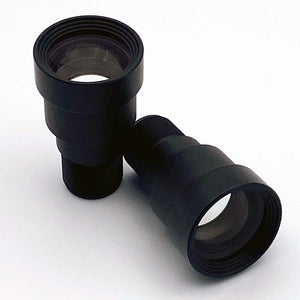
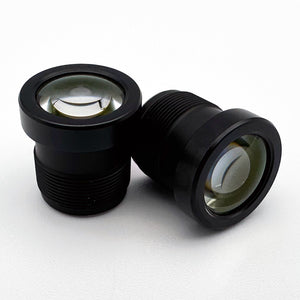
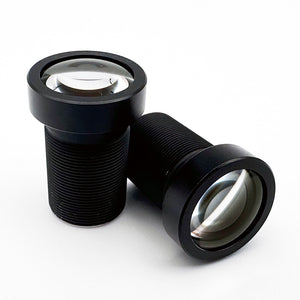
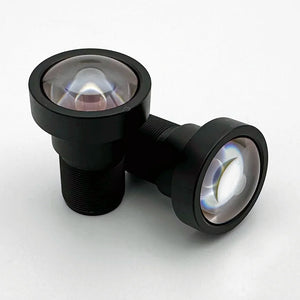
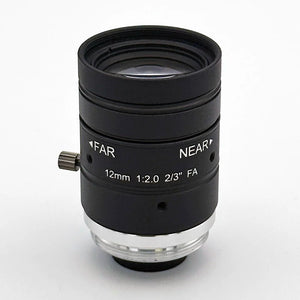
The tradeoff is selection. M12 lenses offer more focal length options, faster apertures, and more low-distortion designs to choose from; the larger barrel gives the designer more room, though any single lens's performance comes from its design and tolerances, not its diameter. If your drone can handle 5-10g of lens weight, M12 gives you more flexibility. The CIL036 (3.3mm, $19) has a published mass of 4g and shows up in a lot of consumer drone builds for that reason.
振動および衝撃
プロペラの振動は、画像の鮮明さを損なう要因となります。高周波の振動は、ドローンが安定してホバリングしている場合でも、映像をぼやけさせてしまいます。着陸時の衝撃で、しっかりと固定されていなかったレンズがずれてしまうこともあります。これを防ぐには、M12ネジにネジロック剤を塗布すること、そしてレンズバレルが保護ハウジングからはみ出さないようにし、衝撃を受ける可能性を排除することが有効です。
Some drone builders pot the lens in place after focusing so it cannot rotate in flight. Treat the adhesive as an engineering decision rather than a dab of whatever is on the bench: uncured silicone byproducts can outgas and fog the lens or sensor, cure shrinkage and creep can shift focus, and a potted lens is hard to rework. Use a low-outgassing compound qualified for optical assemblies and keep it off the glass. If you're doing a lot of takeoffs and landings, consider a recessed mount that keeps the lens barrel inside the airframe profile.
さまざまなミッションにおける視野
FOVの要件は用途によって大きく異なります。FPVレースでは、パイロットが周辺視野でゲートや障害物を確認できるよう、140°から180°以上という最大限の視野角が求められます。この分野では、195°のM8フィッシュアイレンズが人気です。測定を行うわけではなく、単に飛行するだけなので、歪みは問題になりません。
一方、点検用ドローンには逆の特性が求められます。視野角(FOV)を狭く(40°~60°)することで、遠距離からでも被写体に対してより多くの画素数を確保できます。CIL083(8mm、視野角52°)は、まさにこの用途向けに設計されています。つまり、広範囲の撮影範囲と引き換えに、細部の描写力を優先しているのです。
Mapping sits in the middle. You need enough coverage to capture overlapping swaths efficiently, but low distortion to avoid warping your orthomosaics. 70° to 100° is typical. The CIL335 (3.5mm, 92°) works well for this. Use the FOV calculator to match your sensor format.
フォトグラメトリーにおいて、歪みは重要な要素である
Barrel distortion is the curved warping you see in wide-angle images, where straight lines bow outward. For FPV, it's irrelevant. For photogrammetry and mapping, uncorrected distortion throws off ground control point alignment and creates errors in your orthomosaics and 3D models.
Photogrammetry software estimates distortion as part of its camera model, so stable, calibrated distortion is routinely corrected; the correction is only as good as your calibration. A lens with a low published figure, like the CIL083 (-0.5% TV; TV and optical distortion use different references, so compare like with like), leaves less for the model to carry and less residual when the solve is imperfect. Distortion sits in the error budget alongside resolution, overlap, shutter timing, and ground control rather than outranking them. To work the numbers for a specific sensor and altitude, use the drone mapping lens guide, which includes a GSD and object detection calculator.
センサーの互換性
どのレンズにもイメージサークルがあります。その円がセンサーの対角線よりも小さい場合、四隅が暗くなってしまいます。一般的なドローン用センサーとその対角線は以下の通りです:
- IMX477(1/2.3インチ、対角7.9mm):Raspberry Pi用高画質カメラ。より大きなイメージサークルのレンズが必要
- IMX462(1/2.8インチ、対角6.4mm):低照度環境でのドローン撮影に人気
- AR0234(1/2.6インチ、対角6.9mm):グローバルシャッター、高速動作の撮影に適している
- OV9281(1/4インチ、対角4.6mm):一般的なステレオ/深度センサー
イメージサークルのサイズについては、レンズのデータシートを確認するか、当社のセンサーサイズ表をご参照ください。Jetson Nano や Raspberry Pi コンピュートモジュールを中心にシステムを構築する場合、センサーは通常 IMX477 または IMX219 です。ArduCam や e-con には、M12 マウントを備えた優れたモジュールが揃っています。
昼間、夜間、および赤外線(IR)モードでの動作
Some drones fly at dusk or use NIR illumination for night ops. How much near-infrared an M12 lens passes, and how well it holds focus there, depends on its glass, coatings, and any integrated filter, so check the transmission data or specify a no-IR-cut variant rather than assuming. You may also need to remove the IR-cut filter from your camera or add a dedicated IR-pass filter. Fast apertures (F/1.4 to F/2.0) help in low light by gathering more photons per exposure.
熱画像の場合は事情が異なります。LWIR(8~14ミクロン)レンズには、一般的な光学ガラスではなく、ゲルマニウムやカルコゲナイドガラスが使用されています。標準的なM12レンズは熱画像には使用できません。LWIRが必要な場合は、FLIRやSeek製の専用レンズコアを検討する必要があります。
規制上の考慮事項
米国における商用ドローンの運用は、FAAパート107によって規制されています。写真測量、点検、あるいはその他の商用目的でドローンを飛行させる場合、一貫した結果をもたらす信頼性の高い光学機器が必要です。BVLOS(視界外飛行)の免除申請においては、規制当局は、衝突回避システムが十分なカバー範囲と信頼性を備えていることを確認したいと考えています。
これはレンズの仕様ではありませんが、レンズ選定においては重要なポイントです。品質管理が不十分な安価な光学製品は、肝心な時に故障する恐れがあります。弊社では出荷前にすべてのレンズを検査しており、重要な用途向けには個別のMTF測定レポートをご提供可能です。複数の航空機で性能が均一な光学製品が必要な機隊導入の場合、その旨をお知らせいただければ、同一の生産ロットから製品を選定いたします。