Machine vision and inspection
Measuring parts? Detecting defects? Distortion directly affects accuracy. A 2% barrel distortion can turn a pass into a fail on tight-tolerance parts. See our guide on image quality and computer vision.
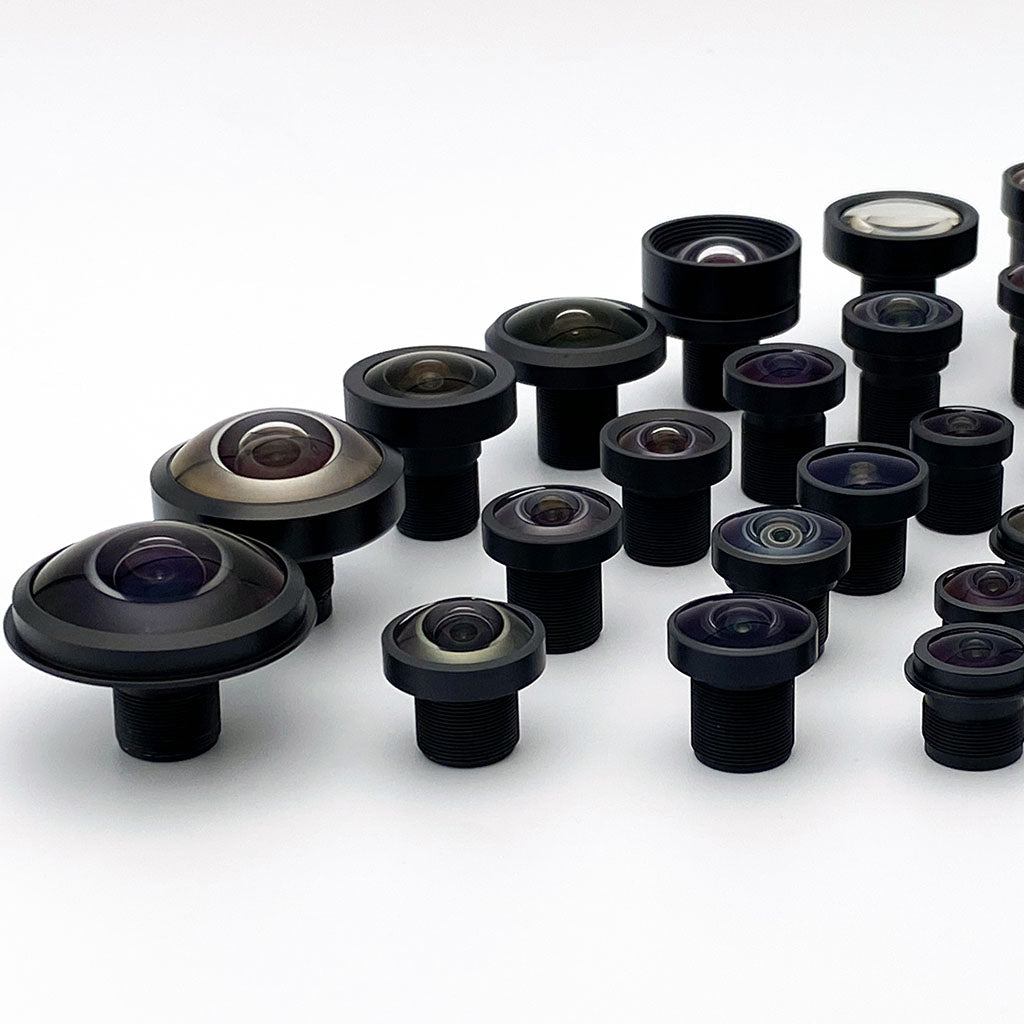
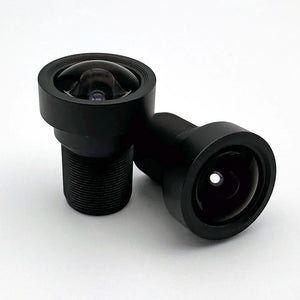
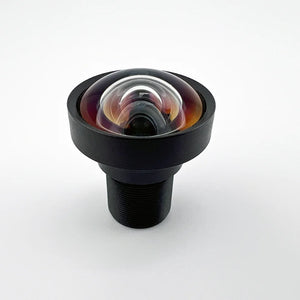
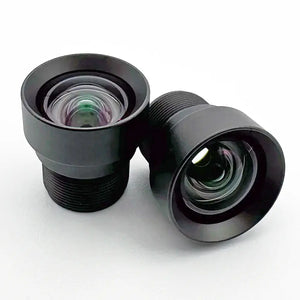
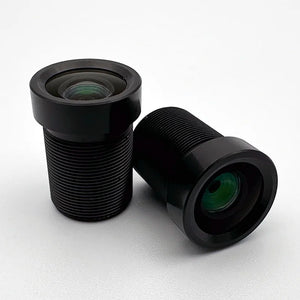
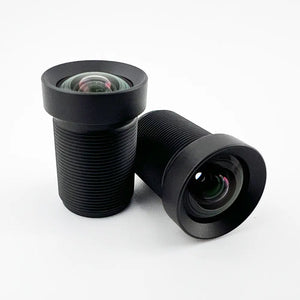
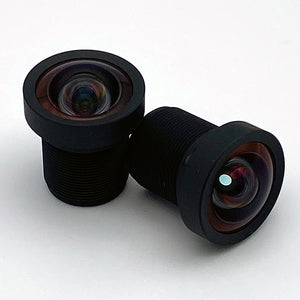
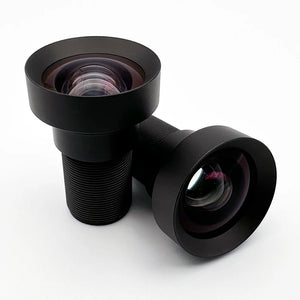
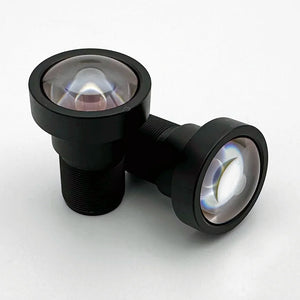
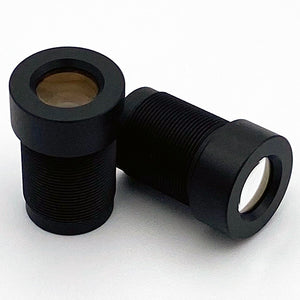
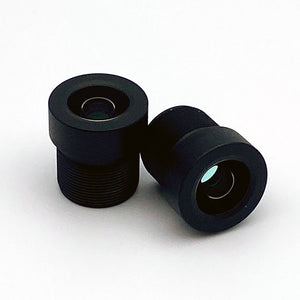
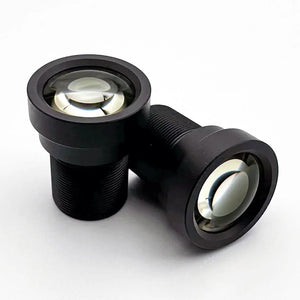
M12 optics for embedded vision where geometric accuracy matters. These lenses preserve straight lines and reduce the need for dewarping so CV algorithms get more pixels per object.
Building inspection systems, mobile robots, or ADAS? This page helps you pick the right lens for your sensor and FOV requirements.
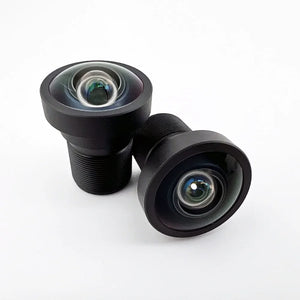
No-distortion M12 lenses minimize geometric error at the optical level. Straight lines across the full frame without software correction—preserving effective resolution and simplifying calibration.
Use these for any work where any geometry error matters.


"No distortion" means extremely low geometric distortion. Every lens has some (physics doesn't give you zero), but a good rectilinear lens keeps it negligible for measurement and machine vision.
Rectilinear projection keeps straight lines straight. Unlike fisheye optics that bend edges, rectilinear lenses maintain consistent geometry across the frame. Detection models and measurement code get cleaner input.
Why bother with distortion control?
For a deeper technical explanation of distortion behavior and wide-angle tradeoffs, see our guide to Wide-Angle Lenses and Fisheye Camera Lens Distortion.
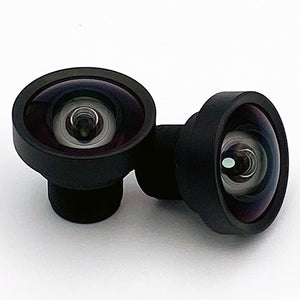
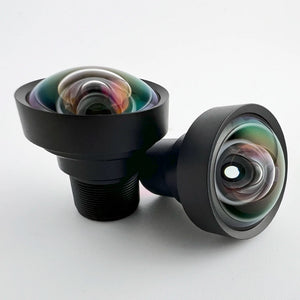
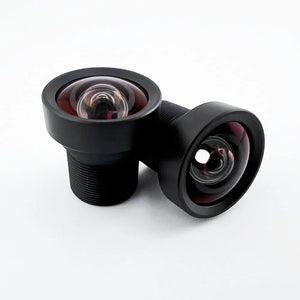
Low-distortion M12 lenses trade some geometric perfection for wider FOV. Images still look straight and calibration works, but coverage takes priority over metrology-grade accuracy.
Use these for robotics, navigation, and general embedded vision where you need wider scene coverage without severe barrel distortion.


Wider FOV means harder distortion control. A 6mm lens gives cleaner geometry than a 2.8mm at the same price. Fighting barrel distortion? Consider whether you actually need that wide a view, or if you can narrow up and sidestep the problem.
You can dewarp in software, but at a cost: lost resolution at edges and added latency. For real-time systems or pixel-level measurement, start with a lens that doesn't need much correction.
A lens for 1/2" sensors won't cover 1" properly—expect vignetting, edge softness, and corner geometry issues. Understanding CMOS sensor sizes helps match lenses correctly. Also consider chief ray angle compatibility with your sensor.
You can verify coverage and framing using our Camera Field of View Calculator.
| Feature | ディストーションなし | 低歪み | フィッシュアイ |
|---|---|---|---|
| Projection type | Rectilinear | Near-rectilinear | Curvilinear |
| Geometry accuracy | Highest | High | Low |
| Measurement suitability | Ideal | Situational | Not recommended |
| Typical field of view | Narrow-Moderate | Moderate-Wide | Ultra-wide |
Measuring parts? Detecting defects? Distortion directly affects accuracy. A 2% barrel distortion can turn a pass into a fail on tight-tolerance parts. See our guide on image quality and computer vision.
SLAM algorithms assume straight geometry. Barrel-distorted images throw off depth estimation. Low-distortion lenses let you see wide without confusing your localization stack. Browse our mobile robotics and aerial robotics lenses.
Lane detection works better when lanes are straight in the image. Curved horizons confuse neural nets trained on rectilinear data. See our automotive M12 lenses for IP67-rated options.
Pick-and-place and alignment systems need consistent pixel-to-millimeter mapping. Distortion throws off calibration, then your robot arm is 2mm off target and you're debugging at 2am.
Useful for specing lenses before you buy:
Rectilinear lenses with tight geometric tolerances. On this page, anything labeled "no distortion" is in that category. Measurement and inspection systems typically use these.
Marketing term. No lens has zero distortion. "Distortion-free" usually means the distortion is low enough that you won't notice it in normal use and straight lines look straight.
Yes, but you pay for it. Dewarping algorithms interpolate pixels, which softens your image and costs resolution at the edges. If you're doing measurement or running latency-sensitive pipelines, it's better to start with clean optics.
Physics. Projecting a hemisphere onto a flat rectangle requires tradeoffs. Wide-angle lenses have it worse because they're bending more of the scene onto the same sensor area.
Barrel (edges bow outward, common in wide-angle), pincushion (edges pinch inward, common in telephoto), and mustache (barrel in the center, pincushion at the corners). Barrel is what you're fighting with most M12 wide-angle lenses.
Size and mounting style. M12 (S-mount) lenses are small, threaded, and common in embedded systems. CS-mount is bigger, standardized for industrial cameras, with a fixed flange distance. M12 is what you want for compact robots and edge devices. See our M12 lens guide and lens mount comparison for the full breakdown.
Tell us your sensor format and FOV requirements. We'll point you to the right lens. Samples ship same day. No minimum order.