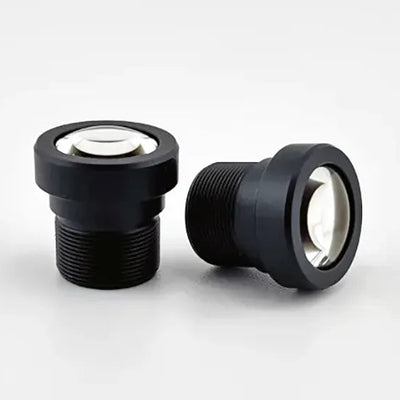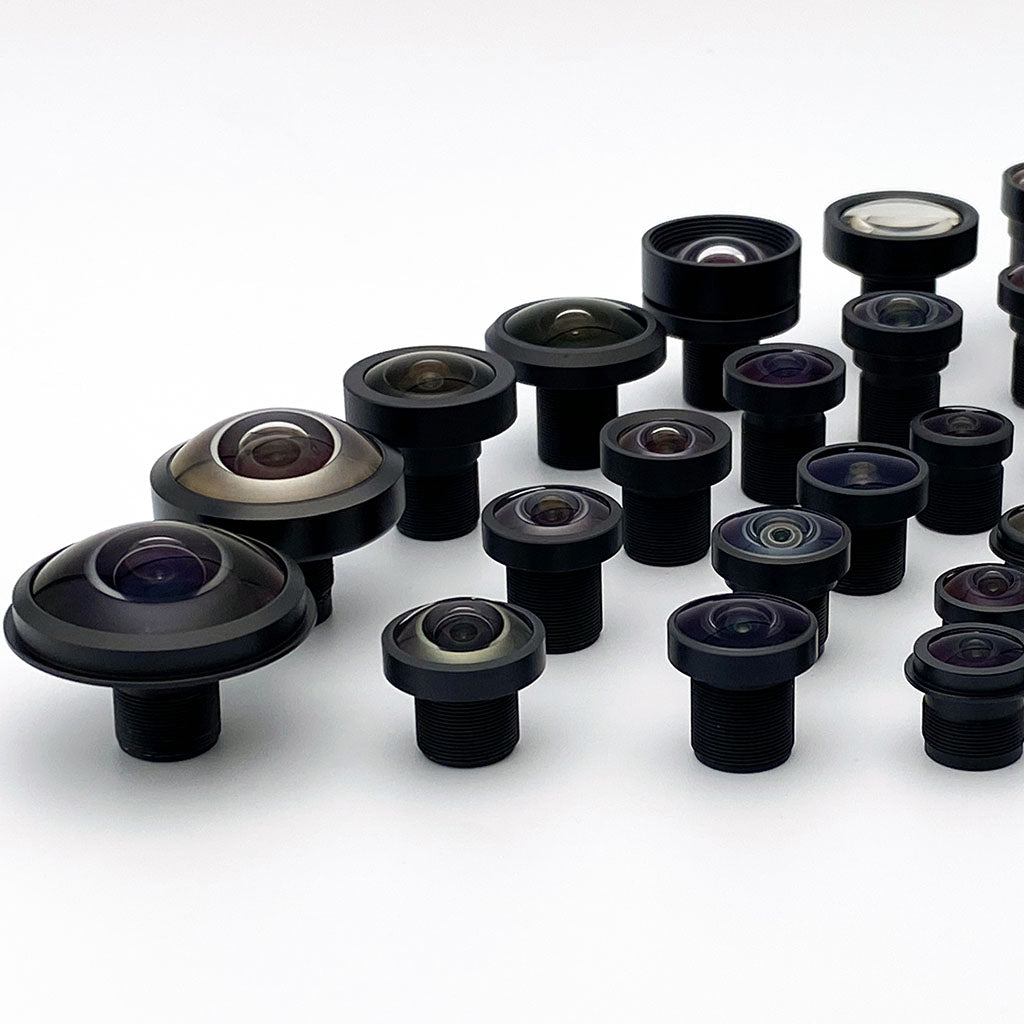

レンズと像の解像度。
「解像度」とは何を指すのでしょうか?そして、なぜそれが重要なのでしょうか?
Resolution is the level of detail an image or optical system can distinguish. It is related to sharpness but not identical to it: sharpening raises edge contrast and apparent sharpness without adding resolved detail.
Five different things get called resolution:
- Pixel count resolution, the number of photosites, display elements, or image pixels
- System resolution, the SFR of a whole camera
- Optical resolution, the MTF of the lens on its own
- Angular sampling, the instantaneous field of view one pixel covers. Optical angular resolution also depends on blur and contrast
- Effective resolution, a supplier rating that pairs a lens with a sensor class
あらゆる種類の解像度は相互に関連しており、これらが相まってコンピュータビジョンに影響を与えています。
なぜ解像度はこれほどわかりにくいのでしょうか?
You're not alone! Even the experts interchangeably use the term "Resolution" when it actually refers to five different quantities, four of them measured and the fifth a rating derived from them. We ran across this misunderstanding between Optical Engineers, Image Quality Engineers, Sensor Engineering, and Computer Vision Engineers during a 2018 conversation within the IEEE P2020 working group.
センサーの解像度は、CMOSセンサーのフォーマットタイプ(例:1/3インチ、1/2インチなど)とも密接に関連しており、これについては別の記事で解説しています。
解像度としてのメガピクセル
画素数・解像度
画素数による解像度は携帯電話業界によって広く普及しましたが、50MP以上のカメラの場合、最終的な出力画像や表示される画像の解像度が50MP以上になることはめったにないため、この指標はしばしば誤解を招きがちです。
定義:- The manufacturer's effective imaging-pixel count for a sensor. Some pixel architectures contain more than one photodiode per output pixel.
- The number of addressable image pixels in a display or projector. Pixels may emit, transmit, or reflect light, and RGB subpixels are counted separately.
- デジタル画像の総画素数。

このカメラは64メガピクセルを搭載しており、12~16メガピクセルの画像を生成します。
The camera is 64MP. This can correctly describe its sensor, but does not specify the pixel count of every output mode.
SFRとしての解決策
「システム解像度」とは何か、そしてなぜ重要なのか?
The system resolution can characterize the quality of any digital image. It is frequently used in digital camera production lines to ensure the lens, lens-to-sensor alignment, and image processing pipeline meet a minimum quality threshold. It can also be used to benchmark different cameras and image processing/compression methods. This metric includes inputs from the Lens, the Lens-to-sensor alignment, the Sensor, the ADC, and the Analog+Digital Image Processing Pipeline.
定義:- The Spatial Frequency Response (SFR) measures contrast as a function of spatial frequency, derived from the edge-spread function of a slanted edge (ISO 12233).
Follow ISO 12233 or read Imatest's website.
How to Express System Resolution:State the response threshold the number is read at (MTF50 is common), then the line widths per picture height at that threshold, the field position, and the illumination. SFR is a response curve across spatial frequency, so a single LW/PH figure only has meaning at a stated threshold.
The MTF50 is 2000 LW/PH at 25° field angle under 1000lux 5000K illumination.
この画像のMTFは2000 LW/PHです。
SFRはコンピュータビジョンにどのような影響を与えるのか?

From: Vasiljevic et al. "Examining the Impact of Blur on Recognition by Convolutional Networks"
MTFとしての解像度
「光学分解能」は、イメージング光学エンジニアによって用いられ、システム分解能の算出に用いられる要素の一つです。
The optical resolution characterizes how much contrast an optical system preserves as detail becomes finer, the measurable basis of perceived sharpness. The MTF applies to both focal and afocal optical systems, including microscopes, imaging lenses, binoculars, and projection optics.
定義:- The Modulation Transfer Function (MTF): the contrast a lens preserves at a stated spatial frequency and field position.
- Two-point criteria such as the Rayleigh criterion answer a different question, the closest separation at which two point sources stay distinguishable, and they do not convert into an MTF percentage.
MTFをパーセンテージ、周波数、視野角、波長とともに記載してください。
このレンズの明所MTFは、視野角50°において200LP/mmで20%です。
このレンズのMTFは20%です。
解像度としての瞬時視野角
「角度分解能」は、航空宇宙・防衛産業やコンピュータビジョンエンジニアによって利用されています。
The Instantaneous Field of View (IFOV) is the angle one pixel covers in object space, so it is quoted per pixel. Pixels per degree is its reciprocal, a sampling density, and on a lens with distortion both figures change with field angle. Neither one is the resolving power of the optics, which is an MTF or Rayleigh question. Pixels per unit distance across an object is a related spatial-sampling figure that only follows once the object range and geometry are fixed.
定義:- IFOV: the angle in object space subtended by one pixel, in degrees, arcminutes, or milliradians per pixel.
- Pixels per degree: the reciprocal of the IFOV expressed in degrees. It is a sampling density, not an angle.
歪みプロファイルの角度分解能も考慮した、当社の高度な視野計算ツールをご利用ください。
角度分解能の表記方法:State which quantity you mean, degrees per pixel or pixels per degree, and give the field angle where it was measured.
The IFOV is 0.083° per pixel at 25° field angle, a sampling density of 12 pixels per degree.
The IFOV is 12 pixels per degree.
コンピュータビジョンにおいて、角度分解能はどのような影響を与えるのでしょうか?
Small image scale can make pedestrian detection harder. The cited historical study by Dollár et al. reports increasing miss rates as pedestrian height in pixels falls. Its results describe the detectors and evaluation conditions tested, rather than a universal 50-pixel threshold for current systems.

From: Dollár et al. "Pedestrian Detection: An Evaluation of the State of the Art"
メガピクセルとMTFを組み合わせた解像度
「効果的な解決策」という表現は、レンズサプライヤーのマーケティングチームによって使用されています
The effective resolution is a quick method to filter down a lens selection when you are creating a new camera. The optical resolution (MTF) of lenses can be challenging to understand without extensive experience in camera hardware. Many experienced camera engineers do not even know the tricks which manufacturers can play with MTF charts/testing, so effective resolution can be a shortcut directly to system-level resolution.
定義:- レンズの光学解像度が適していると想定される、センサーの画素数に基づく解像度。
画素数とイメージセンサーのフォーマットサイズの両方を記載してください。
このレンズは、12MPの1/2.3インチセンサーに適しています。
The lens is rated for 12MP so its optical resolution is suitable for any 12MP sensor.
Ask for the sensor format, pixel pitch, wavelength band, aperture, field position, and MTF criterion behind a lens megapixel rating. Then compare those conditions with your application.
参考資料および関連リンク
- Dollár et al. "Pedestrian Detection: An Evaluation of the State of the Art"
- Vasiljevic et al. "Examining the Impact of Blur on Recognition by Convolutional Networks"
では、Commonlandsではレンズについて話す際、解像度という言葉をどのように扱っているのでしょうか?
As a lens supplier, we base Effective Resolution ratings on empirical System Resolution measurements.
What matters for performance is the final image quality. An ISO 12233 measurement is a whole-camera result: it depends on the sensor's pixel pitch and sampling, the processing pipeline, aperture, focus, field position, and the chart and analysis. We repeat the measurement across sensors with different pixel pitch and state the pairing conditions, so the rating describes the lens on a sensor class rather than a standalone lens constant.
- First, we run through-focus ISO 12233:2014 measurements on a set of sensors whose pixel pitch differs.
- Those measurements also fix the pixel pitch the rating is based on.
- Then we find the maximum image circle diameter the lens delivers.
- Finally, we apply the maximum sensor size and aspect ratio that fits inside that diameter, then calculate the total number of pixels at the limiting pitch.
- We carry that pitch over from the run above rather than measuring anything a second time.
- Then we calculate how many pixels of that pitch fit on a 4:3 sensor of that format type.
高い有効解像度を実現するM12レンズ
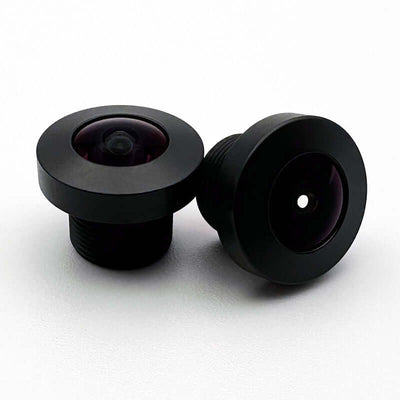
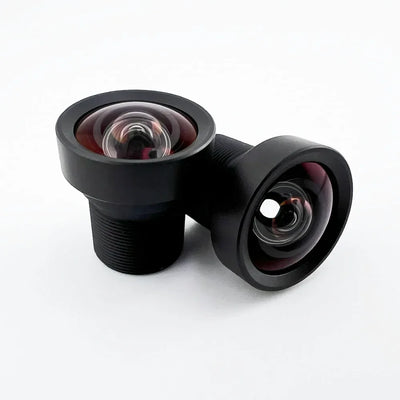
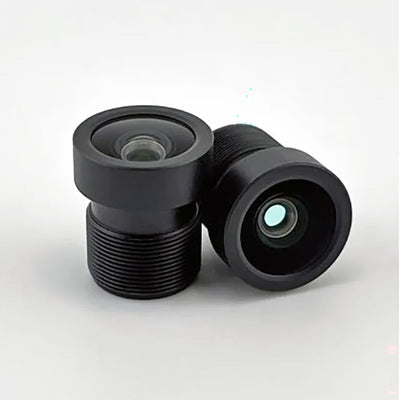
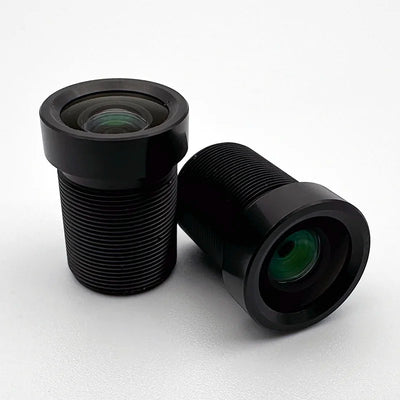
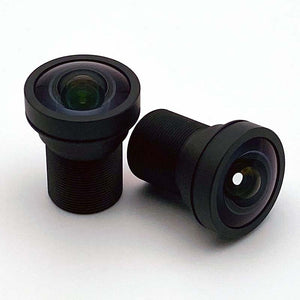
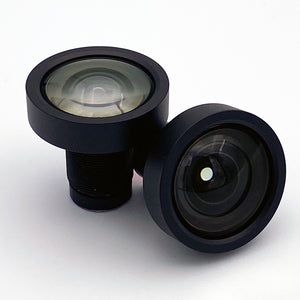
Four M12 lenses from the Commonlands catalog. Each is rated for effective resolution using the through-focus ISO 12233:2014 process described above.
カメラの要件を把握しようとしていますか?
当社の無料Web版「視野角(AoV)計算ツール」を使用して、お使いのシステムに必要な視野角を算出してください。その後、「M12レンズ計算ツール」を使用して、その要件に合致するレンズをお探しください。また、当社の「被写界深度計算ツール」では、あらゆるセンサーとレンズの組み合わせについて、ハイパーフォーカル距離と被写界深度も算出できます。


他にも、多くのエンジニアの方々に興味を持っていただける計算ツールがいくつか用意されています。